People at Work closed on 2 October. The duty didn't.
The psychosocial record that writes itself.
Relay turns a 30 second weekly check in into dated evidence that you identified hazards, consulted your people, acted, and checked whether it worked. Anonymous by design. Mapped to the Code of Practice.
Anonymous by design. Five minutes to set up.
The Problem
A yearly score can't prove the last step.
Australian psychosocial law asks for a cycle: identify the hazards, control them, and review whether the controls worked. A survey once a year tells you where you stood. It can't show what changed after you acted, because nobody was listening in between.

How it Works
Listen every week. Keep the record.
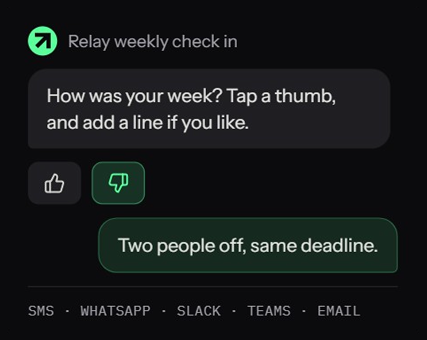
30 seconds, once a week.
One short question set on SMS, WhatsApp, Slack, Teams or email. Short and regular is what keeps people answering, and what lets you see a hazard building.
Mapped to the Code of Practice.
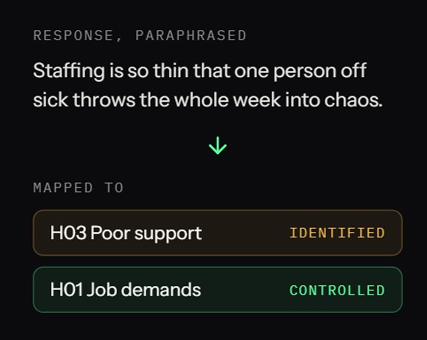
Every response is mapped to the psychosocial hazard categories in the Code. Colour shows what you've done about each one. Text shows what the evidence says.
Anonymous by design, not by policy.
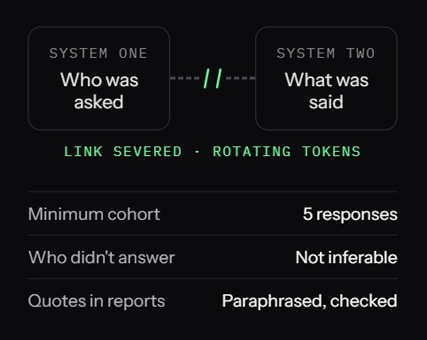
Identity is severed from the response before anyone sees it, including us. Nothing shows from fewer than five responses, and quotes in reports are paraphrased and checked against every original.
The record
Consultation, action and review. Recorded as they happen.
No minutes to write and no evidence to scramble for. The record builds itself from the weekly channel.
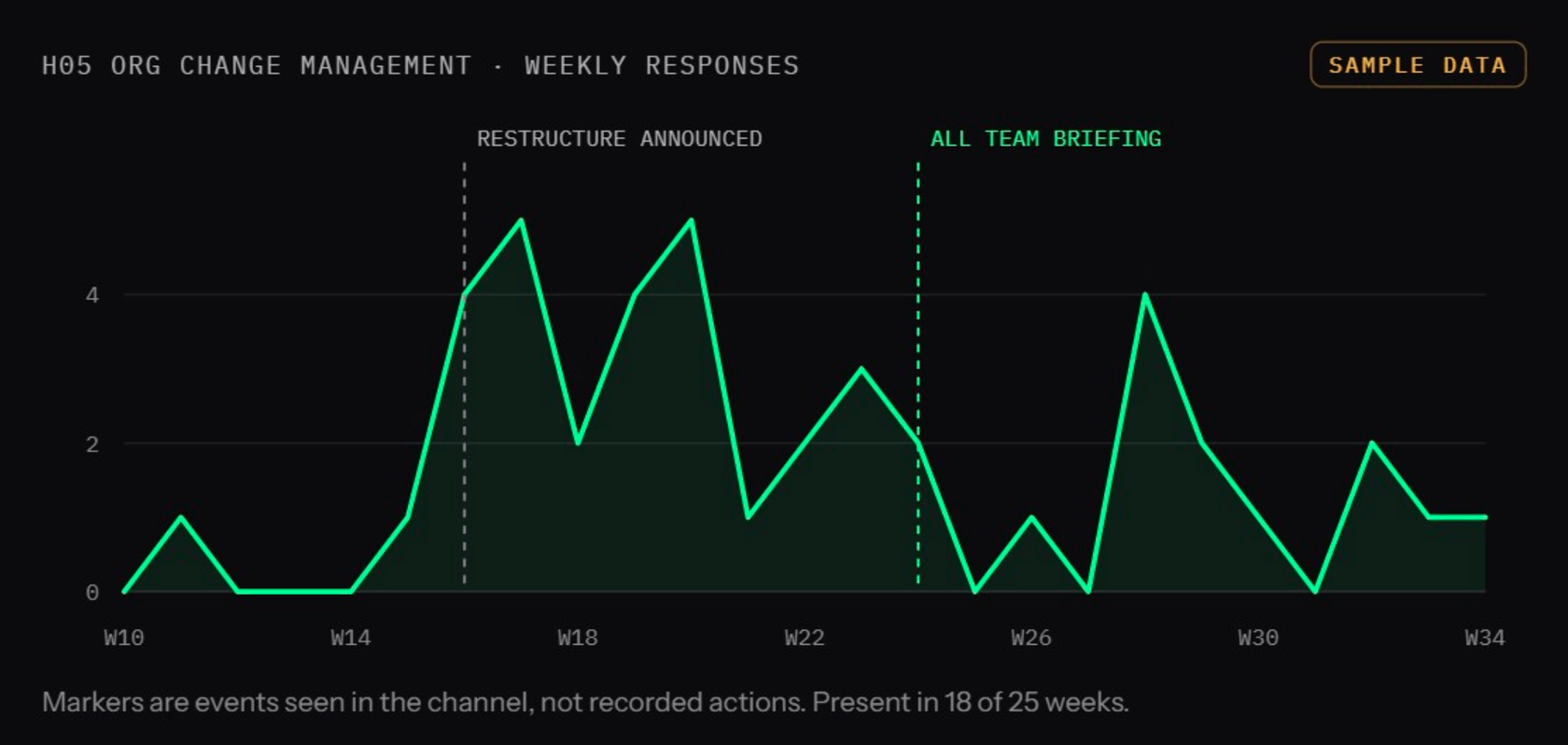
Did it work?
Mark a change or an action and watch that hazard's weekly trend afterwards. It's the review step a yearly survey can't show.
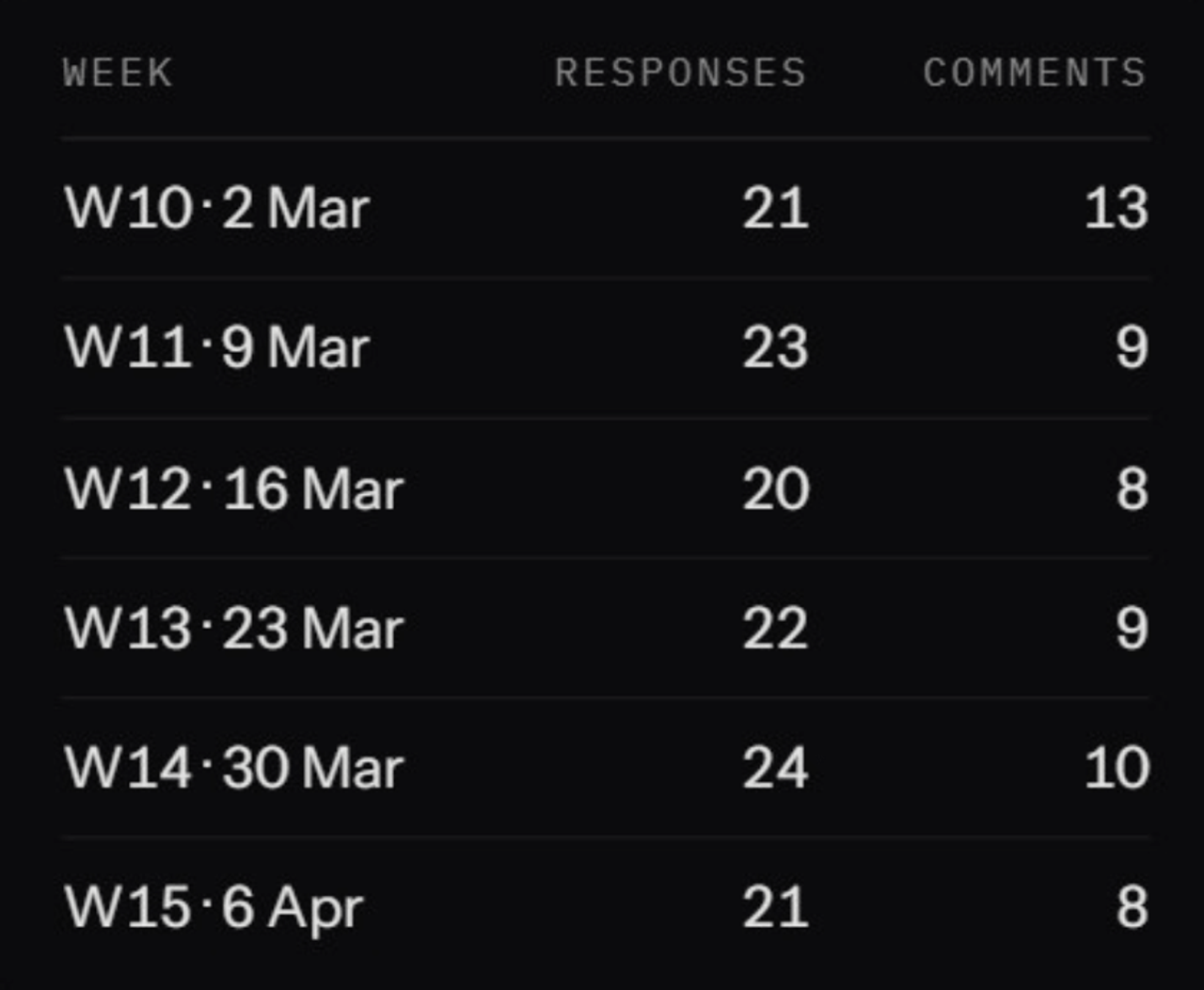
Consultation register.
Every weekly cycle is logged as a dated consultation: what was asked, how many answered, what came up. Evidence supporting your duty to consult workers.
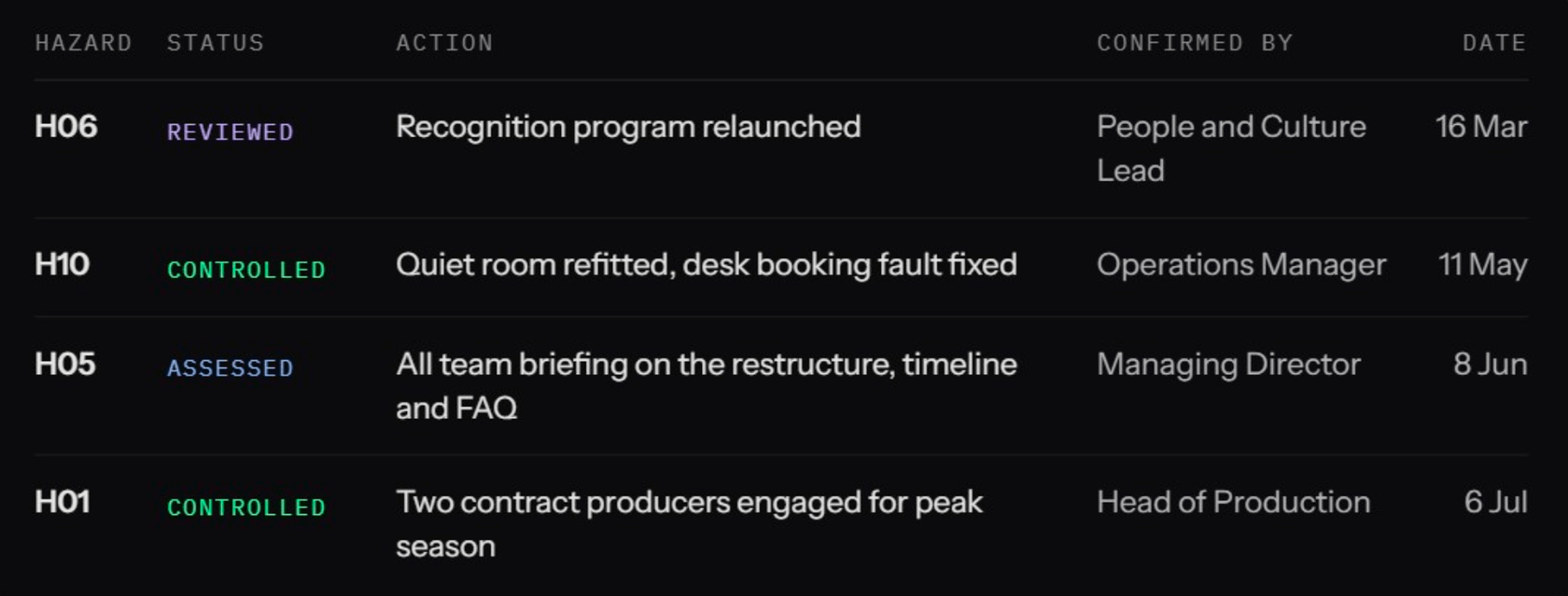
Actions with a named owner.
Record what you did about each hazard, who owns it and when. Relay never marks a hazard controlled on its own. A person confirms it.
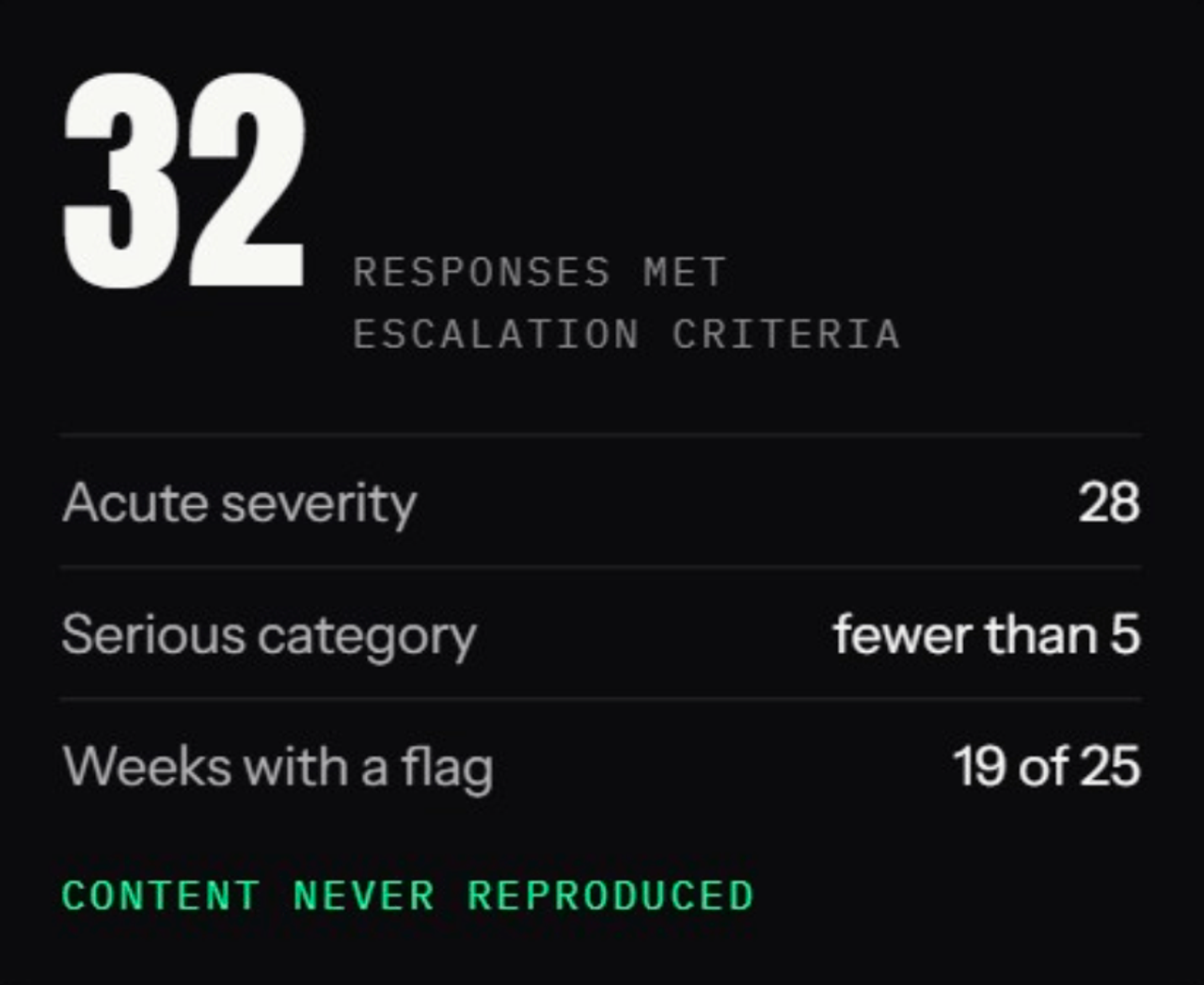
Serious matters, passed on as they arrive.
Responses about violence, bullying or harassment are counted, never quoted, and passed to you for follow up the week they arrive. Never held for a quarterly report.
One page for the board.
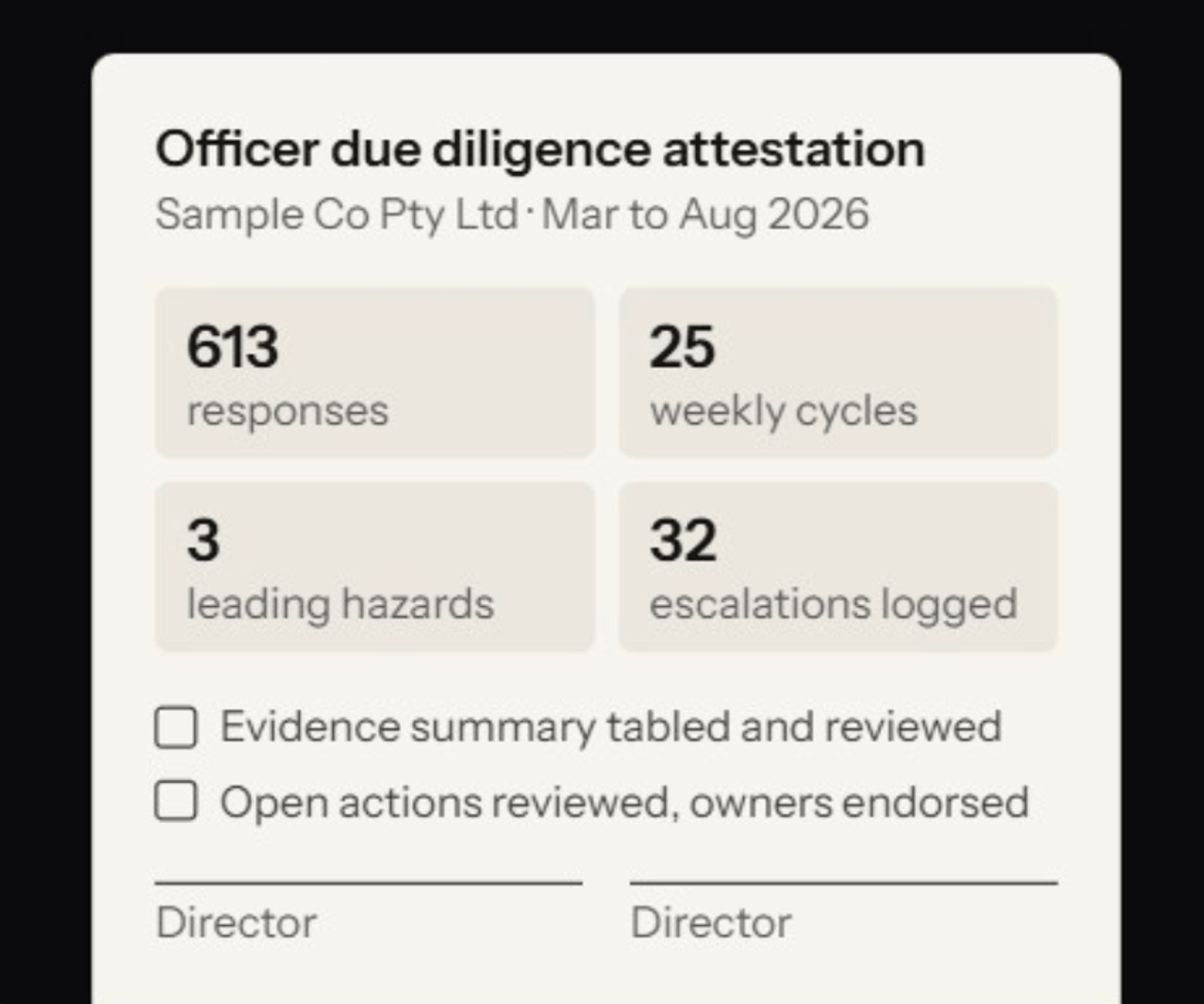
A signable record that officers received and considered the monitoring. Built around the officer due diligence duty.
Evidence pack, any date range.
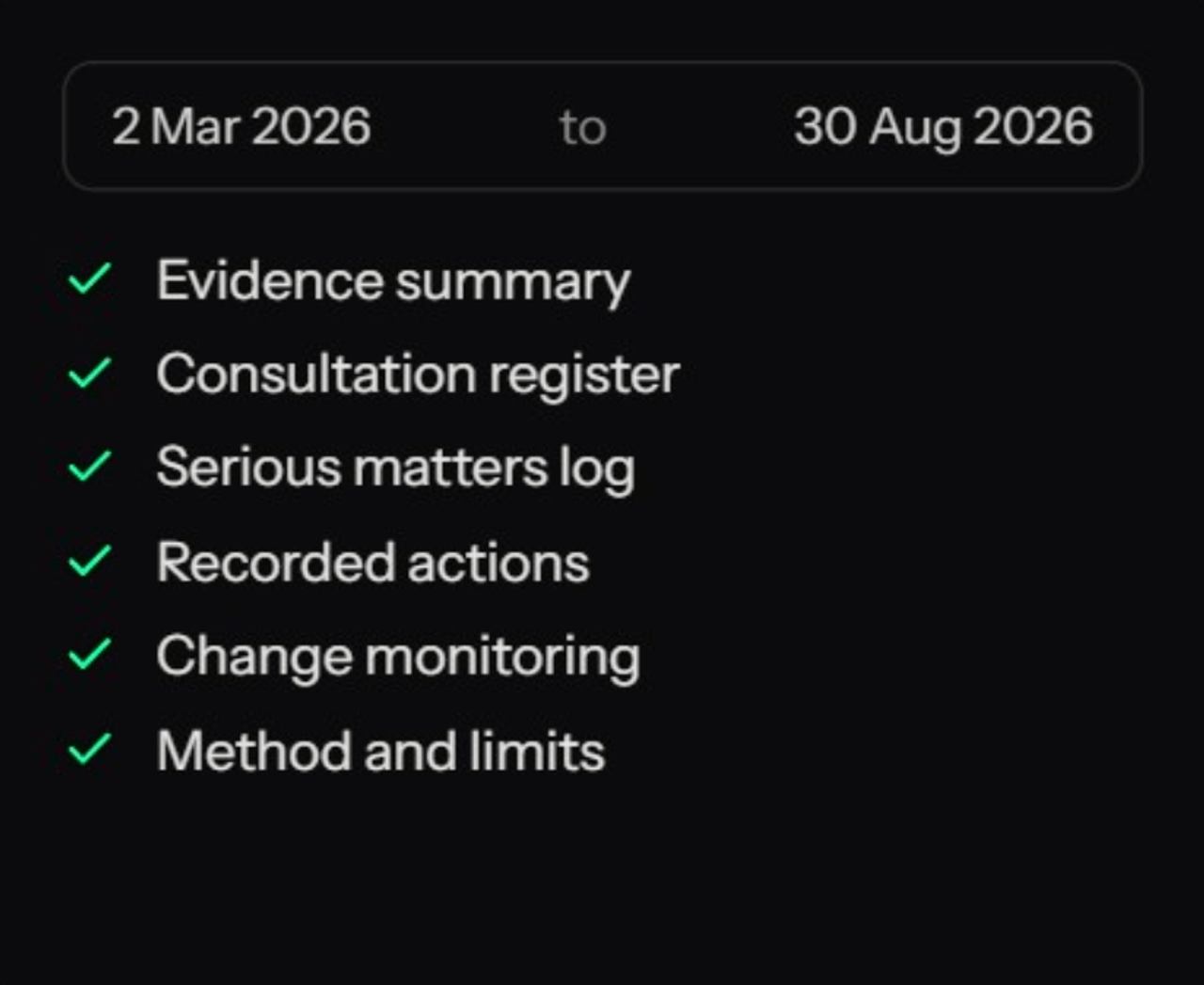
Summary, registers, logs, method and limits for any period you name. Ready the day someone asks for it.
What Relay isn't
Keep your assessment. This is the record in between.
Relay is not a psychosocial risk assessment, and it won't make you compliant. No tool can: duties are met by what you do. Relay is the monitoring and consultation evidence that shows what you did, including what people raised, when, how you responded and whether it helped.
Counts are responses, not people. No signal is not proof a hazard is absent. We print both on every report.
Sample Report
Get the sample report.
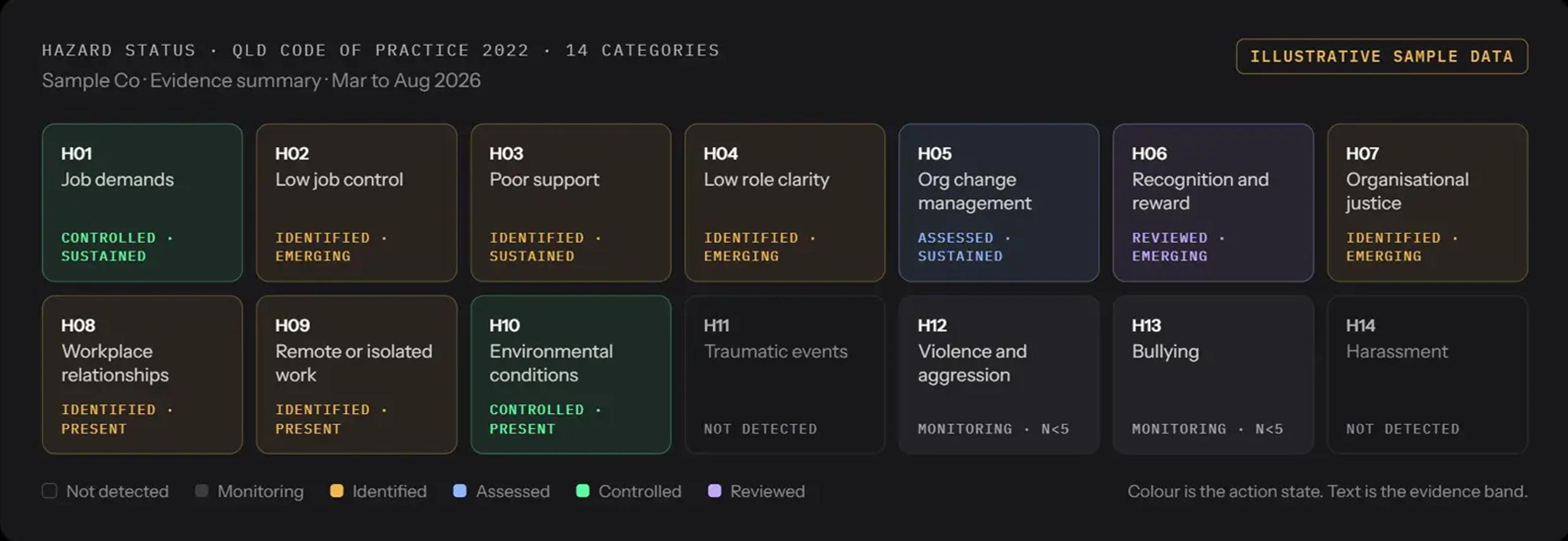
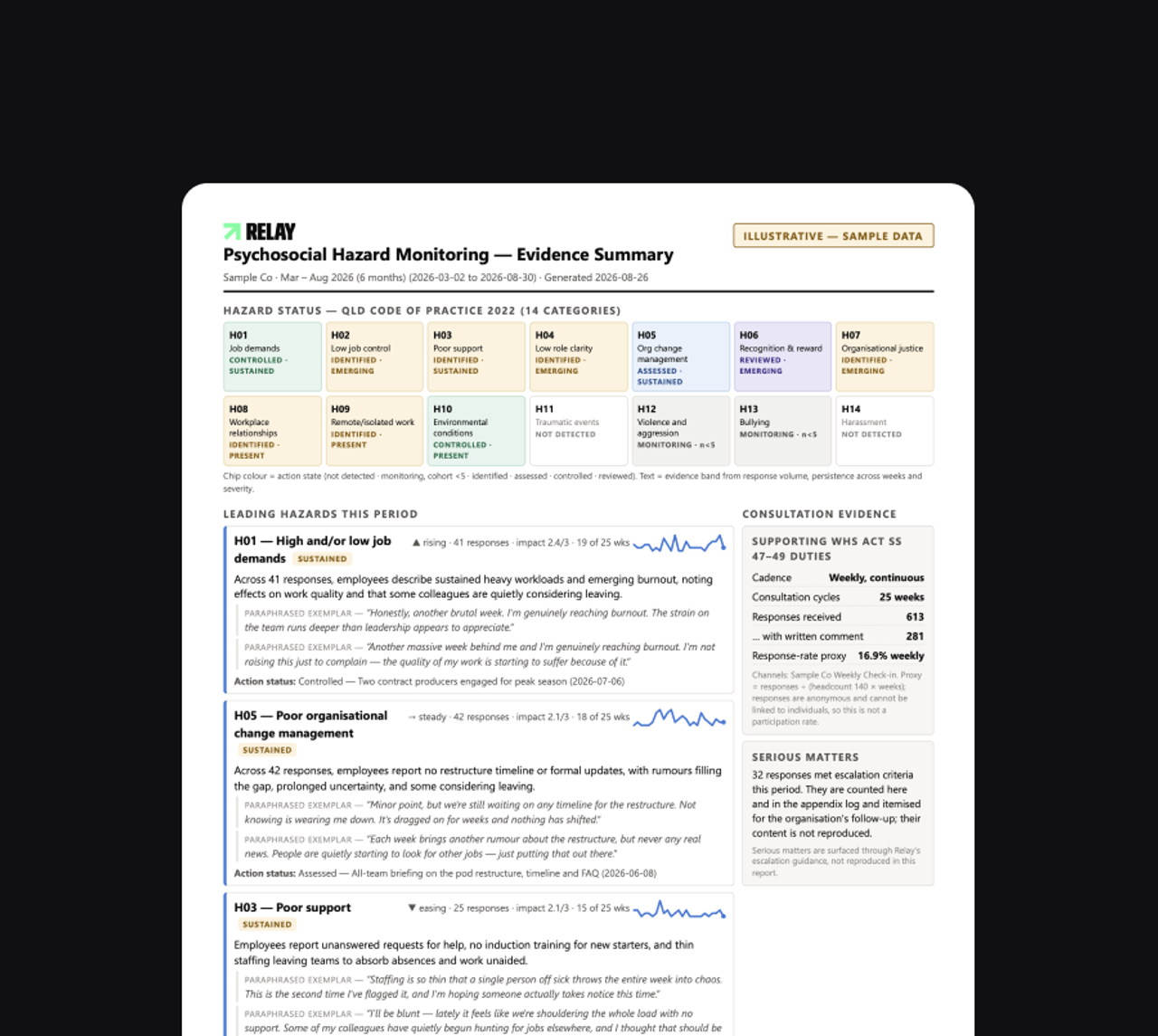
Six months of weekly check ins at Sample Co, an illustrative organisation of 140 people, rendered as the evidence summary and appendix.
Illustrative sample data. No real organisation.
Questions, answered straight.
No. It's monitoring and consultation evidence. Your assessment stays yours; Relay is the dated record that you're doing the work, which is also why it's safe to show a regulator.